


Kanoon Ki Dastak
Jammu, March 25, 2025: The Jammu and Kashmir and Ladakh High Court has ruled that a disclosure statement made by an accused is inadmissible in evidence unless it leads to the discovery of a fact. The court observed that a mere statement made in police custody, without subsequent recovery of incriminating material, is hit by Section 26 of the Evidence Act and cannot be relied upon for conviction.
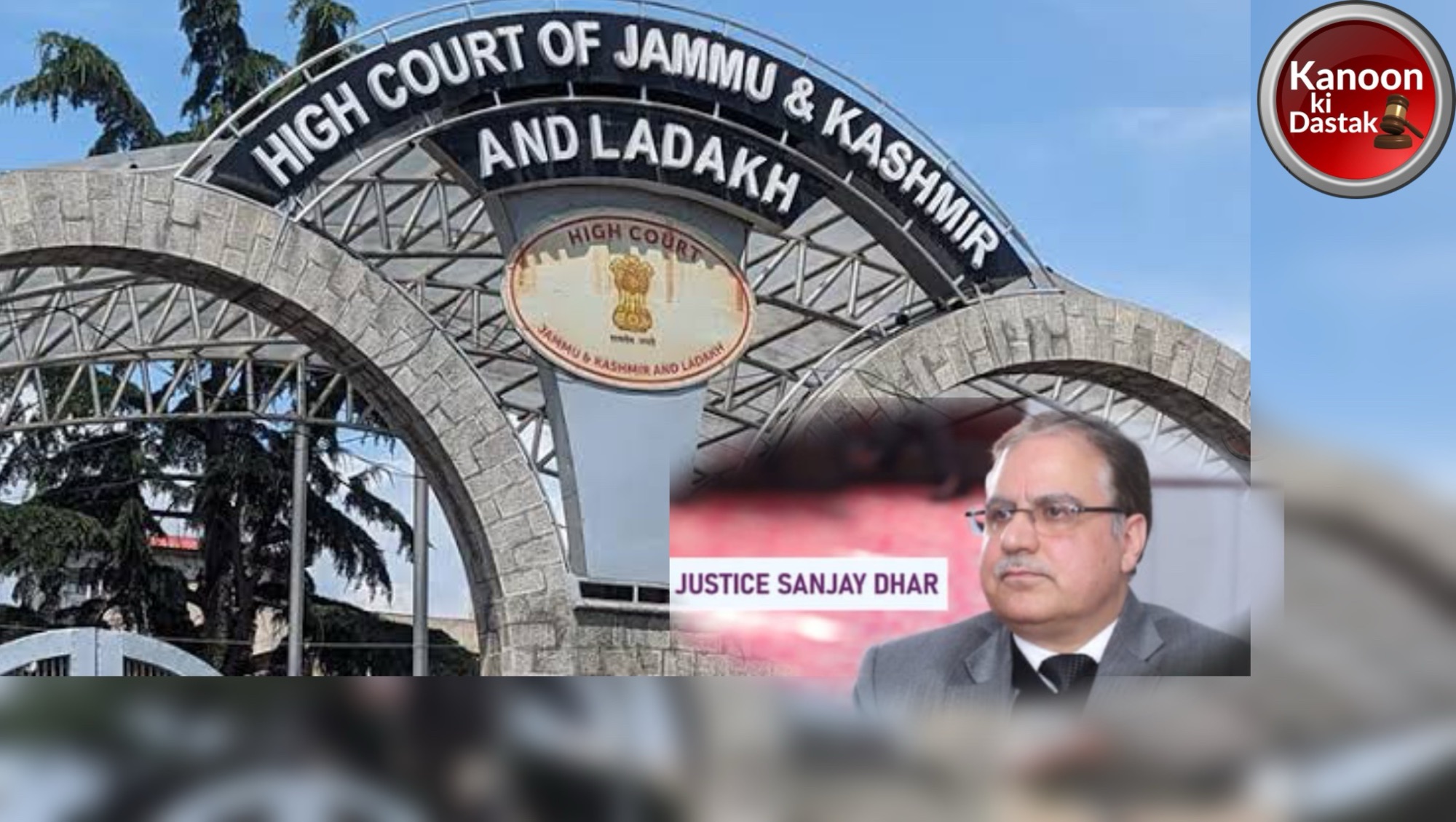
Justice Sanjay Dhar made this observation while granting bail to petitioner Yugraj Singh, accused under the NDPS Act. Singh was arrested in connection with the smuggling of heroin and financing illicit trafficking. The prosecution claimed that co-accused individuals had identified him as the supplier of narcotics, and Singh himself had allegedly admitted to running a heroin supply network.
However, the court found that no recovery was made based on Singh’s disclosure statement. “As per Section 27 of the Evidence Act, unless the disclosure leads to the discovery of a fact, it does not become admissible in evidence,” the court stated. The court also held that the statements of co-accused implicating Singh, made in police custody, are also inadmissible.
Further, the court noted that call detail records (CDRs) showing communication between Singh and the co-accused were insufficient to establish his guilt under Section 27-A of the NDPS Act. “Mere contact between the accused and co-accused, without voice recordings or corroborative evidence, raises suspicion but does not prove guilt,” the order stated.
Granting bail to Singh, the court emphasized that he had no prior criminal record and that co-accused Yaqoob Ali had already been granted bail on similar grounds. Singh was released on conditions, including furnishing sureties and surrendering his passport.
The ruling reinforces the principle that confessions made in police custody, without independent corroboration, cannot be the sole basis for conviction under the NDPS Act.